
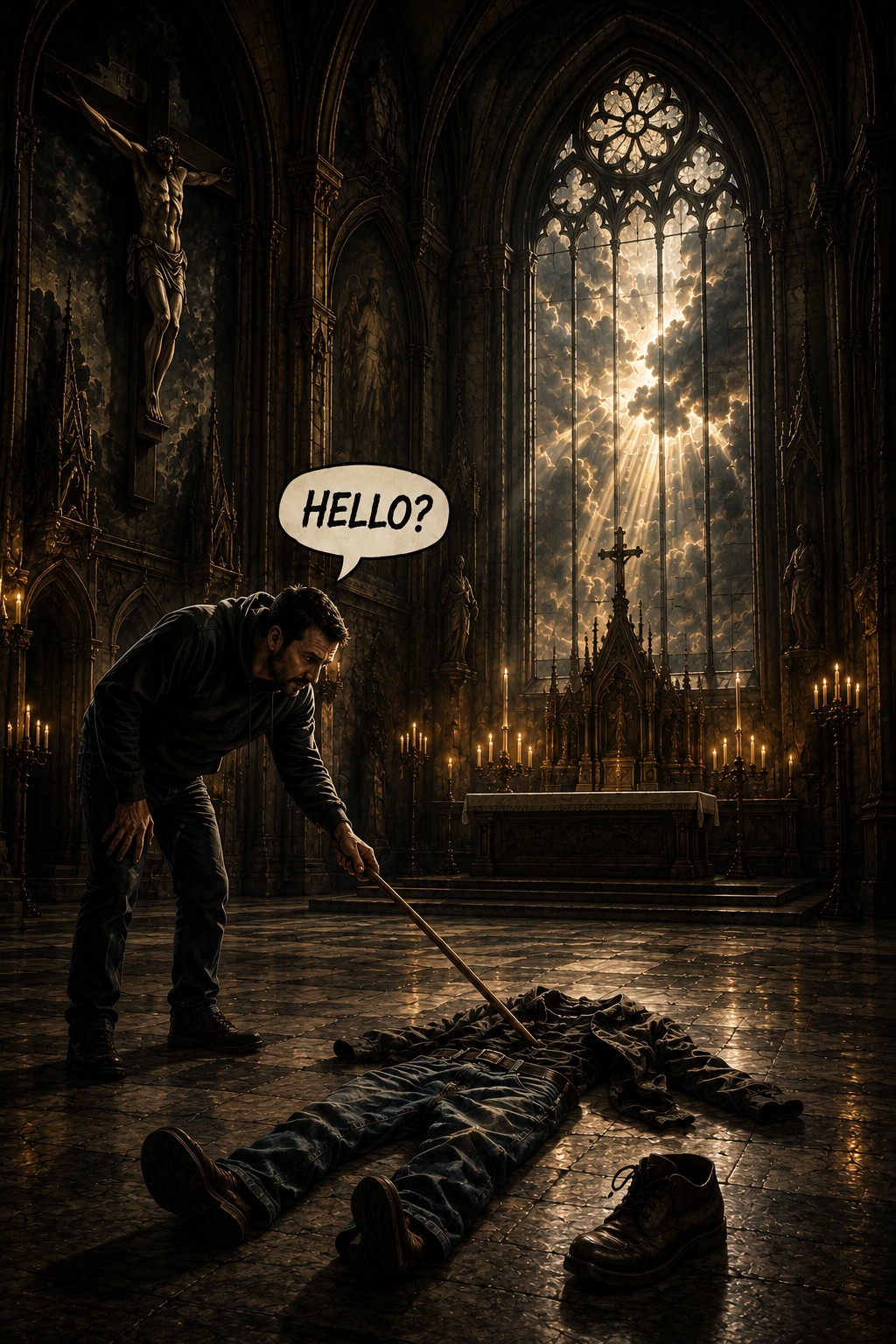
Why do you claim the rapture isn’t true?
I do not claim that Christians will never be “caught up” to meet Christ. Scripture explicitly teaches that they will. What I reject is what is commonly meant today by the Rapture: the idea that Jesus will return for the Church, remove believers from the earth, and then return again later at the Second Coming.
The question is not whether believers will be caught up. The question is whether Scripture separates that event from the return of Christ.
Paul writes:
“For the Lord himself will descend from heaven with a shout, with the voice of the archangel and with God’s trumpet. The dead in Christ will rise first, then we who are alive, who are left, will be caught up together with them in the clouds, to meet the Lord in the air. So we will be with the Lord forever.”
1 Thessalonians 4:16–17»
The words translated “caught up” come from the Greek verb harpazō, meaning to seize, snatch, or catch up. The English word rapture ultimately comes through the Latin translation of this passage. In that basic sense, there is nothing wrong with saying Christians will be raptured. Paul says they will be caught up.
The disagreement begins when this passage is made into an event separate from the Second Coming.
The Lord Descends and the Dead Rise
Look at what Paul actually describes. The Lord descends from heaven with a shout, the voice of an archangel, and the trumpet of God. The dead in Christ rise, and the believers who remain alive are caught up together with them.
Paul describes the resurrection similarly in 1 Corinthians:
“Behold, I tell you a mystery. We will not all sleep, but we will all be changed, in a moment, in the twinkling of an eye, at the last trumpet. For the trumpet will sound, and the dead will be raised incorruptible, and we will be changed.”
1 Corinthians 15:51–52»
The same elements appear together. The trumpet sounds, the dead are raised, and living believers are changed.
This is important because Jesus repeatedly places the resurrection of his people at the last day:
“This is the will of him who sent me, that everyone who sees the Son, and believes in him, should have eternal life; and I will raise him up at the last day.”
John 6:40»
Jesus repeats that statement in John 6:44 and 6:54.
First Thessalonians 4 places the catching up of living believers alongside the resurrection of dead believers. Jesus places that resurrection at the last day. Nothing in these passages requires another resurrection and gathering several years before the end.
The Coming of the Lord
Paul tells us what event he is discussing:
“For this we tell you by the word of the Lord, that we who are alive, who are left to the coming of the Lord, will in no way precede those who have fallen asleep.”
1 Thessalonians 4:15»
The word translated “coming” is parousia. Paul uses the same word when he returns to the subject in his second letter:
“Now, brothers, concerning the coming of our Lord Jesus Christ and our gathering together to him, we ask you not to be quickly shaken in your mind, nor yet be troubled, either by spirit, or by word, or by letter as from us, saying that the day of Christ had come.”
2 Thessalonians 2:1–2»
Notice how Paul speaks of “the coming of our Lord Jesus Christ” and “our gathering together to him” as part of the same discussion. He then tells the Thessalonians that they should not believe that day has arrived because other events must occur first.
That is significant. Paul does not tell them that their gathering to Christ must happen before those events. Instead, he discusses Christ’s coming and their gathering together and then explains what precedes that day.
Meeting the Returning King
First Thessalonians 4 says believers will be caught up “to meet the Lord in the air.” The passage does not say that Jesus then reverses direction and takes everyone back to heaven for several years. That conclusion has to be supplied by the theological system brought to the passage.
The word translated “meet” is apantēsis. We see the same word used elsewhere in the New Testament.
When Paul approaches Rome in Acts 28, Christians travel out to meet him:
“The brothers, when they heard of us, came to meet us as far as The Market of Appius and The Three Taverns.”
Acts 28:15»
They meet the arriving Paul and accompany him as he continues toward Rome.
The same word appears in Jesus’ parable of the ten virgins:
“Behold! The bridegroom is coming! Come out to meet him!”
Matthew 25:6»
In both examples, people go out to meet someone who is arriving. That usage fits naturally with Paul’s description in 1 Thessalonians 4: Christ descends, his people are raised and transformed, and they are caught up to meet their returning Lord.
The word itself does not settle every question about what happens afterward, but neither does it support the assumption that Christ must take the gathered saints back to heaven for a separate period before returning again.
Why Paul Wrote This
The context of 1 Thessalonians 4 is easy to lose when the passage becomes a chart of end-times events.
Paul is comforting Christians who are grieving believers who have died.
“But we don’t want you to be ignorant, brothers, concerning those who have fallen asleep, so that you don’t grieve like the rest, who have no hope.”
1 Thessalonians 4:13»
Their concern is not, “How do we escape the Tribulation?”
Their concern is what happens to Christians who die before Christ returns.
Paul’s answer is that they have lost nothing. When Christ comes, the dead in Christ will rise first. Those believers who remain alive will then be caught up together with them, and all of Christ’s people will be with him forever.
That is Paul’s comfort.
So Is the Rapture Biblical?
If by “rapture” you mean that living Christians will be caught up to meet Jesus when he returns, then yes. I believe exactly what 1 Thessalonians 4 says.
What I do not find in the passage is a separate coming of Christ in which the Church is removed from the earth years before his final return.
The catching up is there. The resurrection is there. The transformation of living believers is there. The return of Christ is there.
The separation of those events into two different comings is what I do not find in the text.